

The truth about Margo
Well, thank you very much.

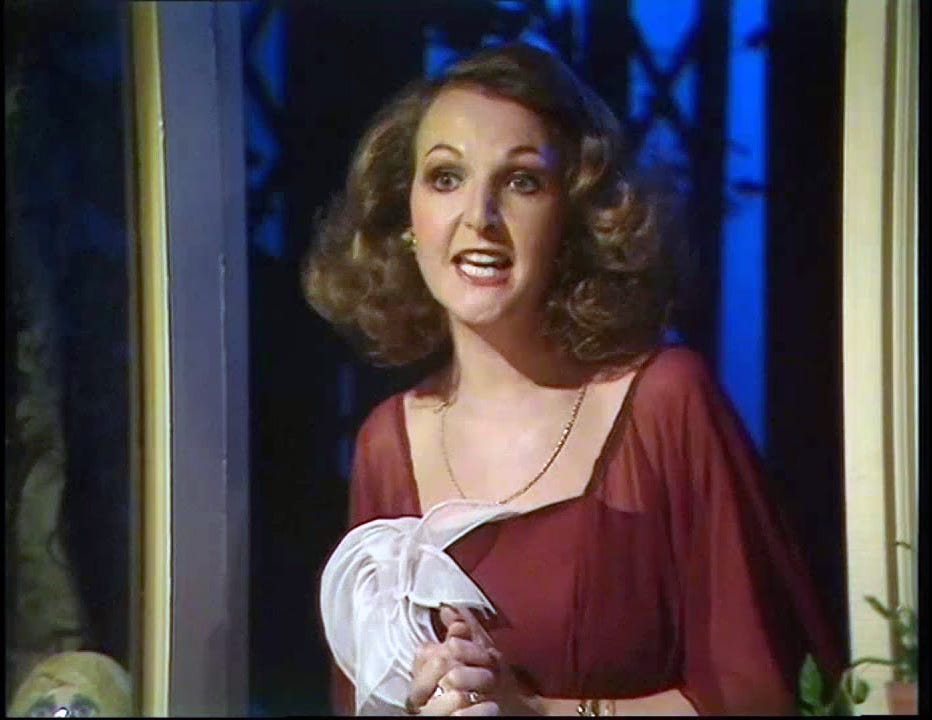
Ageing is an honour and a curse which progresses like a particularly brutal game of pass the parcel. Off come the layers, slowly, deliberately. Oh joy – an extra gift hidden in the paper is revealed! Commiserations – nothing but dashed hopes and indelible newsprint staining your fingers yet again. The world notches up another treat-free round on the news of the death of Dame Penelope Keith, she of handsome face, cut-glass vowels, and iconic roles.
Penelope bestrode the second half of the seventies and the first of the eighties as a colossus of comedy, and it was in the latter decade that my aspirational crush on her began. I watched, rapt, her performance as Audrey fforbes-Hamilton in To the Manor Born, and then again, with more lustrous locks and funkier rig-out, in reruns of The Good Life playing the affectionally monstrous Margo Leadbetter.
Perhaps it is reductive to focus only on Penelope’s two posh lady sitcom roles of the many, many parts she played. If anything it is a compliment that almost 50 years later, Margo Leadbetter is so firmly ensconced in popular culture. She is a warning, an aspiration, a trial, a saviour; she was, is, and will always be A Moment. Penelope’s talent ensured she could play almost any role but nobody else could’ve encapsulated Margo – the ‘Disgusted of Tunbridge Wells’ prototype – so perfectly, stealing every scene, including those she wasn’t in, because the anticipation of Margo was almost as riveting as her presence.
Many sitcom characters eventually become slaves to their catchphrases to get laughs, but when you look at Margo’s most regular one-liners they were both spectacularly ordinary. ‘Good evening Barbara, good evening Tom’ and ‘Well, thank you very much Jerry’ look like nothing on paper, or on a screen. They are not amusing lines, they are fillers at best, but when said by Margo in that crystalline, reproachful voice, with that composed, almost stony face and uptight demeanour, it becomes gold.
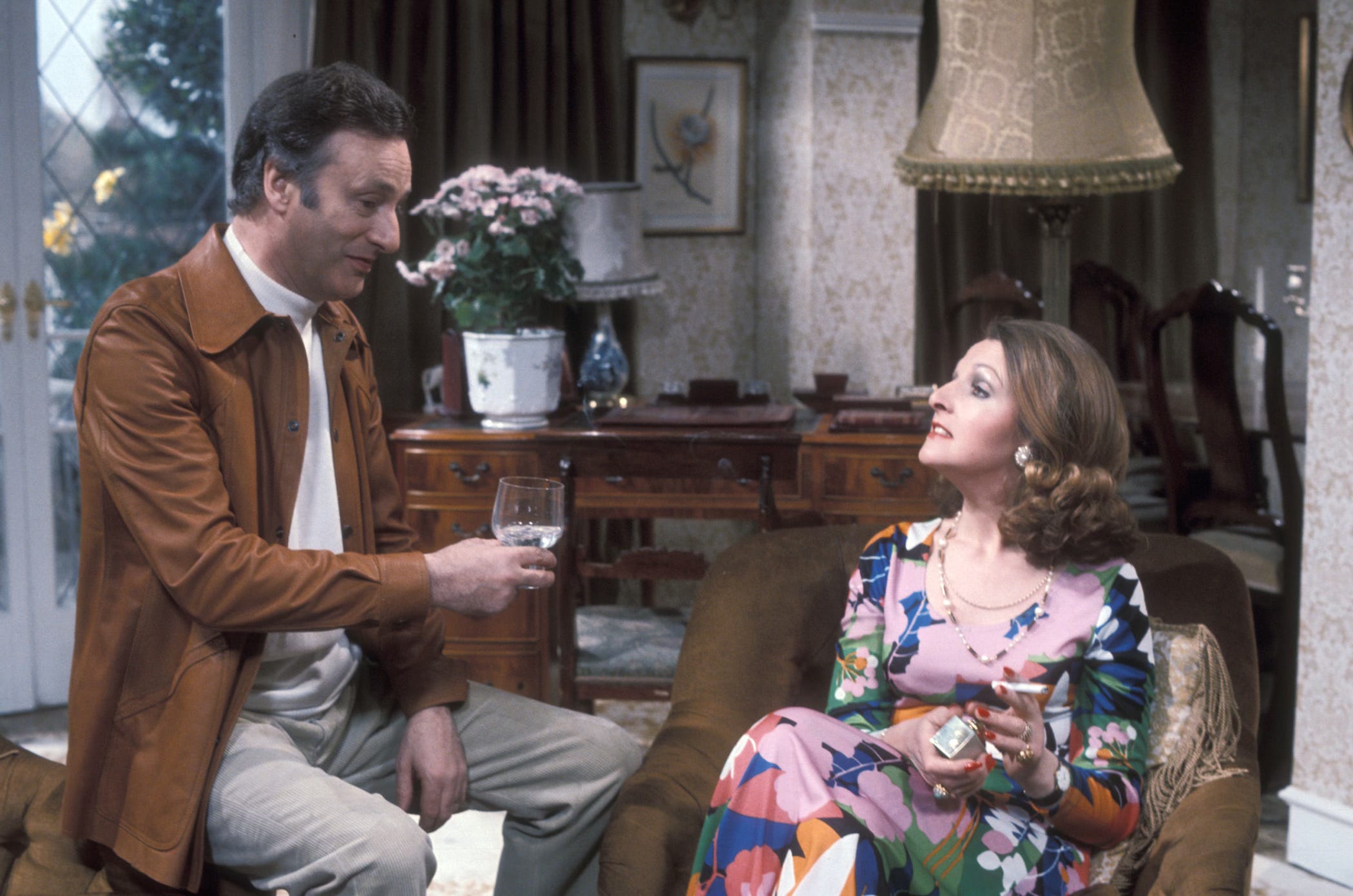
If I got my appetite for zingers from Patricia Routledge’s Kitty, my assertiveness from Prunella Scales’s Sybil, and my taste for spite from Joan Collins’s Alexis (still with us, thank goodness), then my thirst for grandiosity and aspiration for something more was all down to Penelope as Margo. I was a child on a (nice enough) council estate, not quite a have-not, but a lot less than the haves, who was treated like garbage by most of my peers, and yet something in me felt elevated, somehow. Like I knew it wouldn’t be for ever. A dark kind of hope, perhaps.
I believed, maybe, aged eight or whatever, that one day my entire Christmas would come from Harrods, or that I would attend music society meetings in the formal lounges of large detached houses in the south of England. Hyacinth Bucket might have thought she was something special as she clambered up the social ladder, but Margo Leadbetter walked the walk. She was the real deal. From shaking off the shame of being labelled ‘Starchy Sturgess’ at boarding school, to her role as commander in chief of the Leadbetter home and social calendar, Margo took the wheel of her own life and kept her foot on the go pedal.
Her mouth would often get her into trouble – relatable – and her grand plans would often be thwarted by the very oiks she tried to belittle, but I got it. I got her. To strive for status and perfection was Margo’s fuel, but she wasn’t a total monster. She still had a conscience, and she could be humbled. Despite being mortified by them, in keeping with her lofty position in Surbiton’s hierarchy, Margo cared deeply for her back-to-basics neighbours Barbara and Tom.
Did her numerous attempts to persuade the Goods to rejoin the capitalism train come off as controlling? Yes, but it came from genuine affection, especially for Barbara, who Margo clearly believed should’ve been steering the marriage as she did hers. And who among us has not cringed inside as one of our dear friends does something embarrassing? You may despair of someone, but you can still love them at the same time.
Margo’s loyalty to her husband was never in question. Poor put-upon Jerry may have been expected to bring home the bacon and keep his gob shut, but being Margo Leadbetter was a full-time job in itself, and its chief burden was portraying an image of idyllic suburban coupledom so Jerry could secure his promotions, and be fulfilled and as happy as it was appropriate to be after a decade or so of marriage.
The first ever gif I uploaded was one of Penelope Keith as Margo, saying ‘Well, thank you very much, Jerry’, to the very top of my MySpace page almost twenty years ago. I suppose I thought of myself as a Margo type – a snob, maybe – but I didn’t really have the credentials to back it up. Margo’s main fault was her imperious rudeness when it came to service staff – although it always came back to bite her – and behaving like that wouldn’t really have worked for me, not that I’d have wanted to. (I mean, I have definitely lost my temper on the phone to a call centre in my day, but it never got my anywhere and I wouldn’t dream of it now – funny how these things fall out of fashion for you once you realise how terrible you are and how gauche it is to be angry at innocent strangers.)
And I haven’t even got to the fun parts! The kaftans! The dresses with migraine-inducing patterns! The outfit for every granular occasion – pruning, aperitifs, visiting the town hall! Her hats! Her hairdos! Her headscarves! The wafting of her cigarette! Somehow always choosing to enjoy her garden just as Tom and Barbara were manoeuvring a Clydesdale mare into place to shit over her fence! Being a giddy drunk! Her telephone manner falling somewhere between Princess Margaret ordering someone be executed and Barbara Cartland sending a steak back to the kitchen! Her compulsion for vengeance, especially against am-dram rival Dolly Mountshaft!
And still finding time to be assertive, submissive, sexy, imposing, austere, playful, lovable, and frightening. Chaka Khan sang ‘I’m Every Woman’ but Margo Leadbetter lived it.
The loss of Dame Penelope cuts deeply into the hearts of those who never knew her. Famous people often have only a few minutes on screen per week to make an impression on you. It is no coincidence that the worst episode of The Good Life is the very first one, which features only the VOICE of Margo; she doesn’t actually appear. I still remember watching it for the first time, very young, and being excited that Audrey fforbes-Hamilton was in something else, and being crushed to only hear her, at the very end, say one line off-screen. But in those subsequent half-hours, Penelope – and Margo – made every minute count. How dull the hours, days, and weeks will feel now knowing that Margo has slammed down the receiver of her tasteful cream rotary dial – or her dark green trimphone in the drawing room – for the very last time.
Thank you very much, Penelope.
Author Matt Cain, who launched his own independent publisher Pansy earlier this year, selected my Edinburgh-set dark comedy LEADING MAN as one of his favourite uplifting LGBTQ+ novels. You can read his full selection on The i Paper website.
Weirdly I'm hosting a garden soirée at home next month, the invitation went out ages ago & the theme is The Good Life. I suspect the Margo & Jerrys will outnumber the Barbara and Toms. Lovely tribute ✨
"The ooh-ahh bird..." Such a sad loss.