The truth about yearning
The value of harmless fantasy.
Yearning is the staple of any gay content that isn’t drag queens leathering each other on a runway. Nobody loves to lock in on fictional yearning more than a queer person, even well-adjusted ones who met their soulmate at 18 and now live in a four-bedroom McMansion on the Thameslink route with their six Italian greyhounds (they call themselves ‘dog dads’).
Onscreen yearning is the ultimate in relatable fantasies for someone who grew up queer, especially one who was closeted for any length in time. We enjoy watching the longing looks through tear-stained lashes, the gentle nibble on the lip as they watch the object of their affection gaze back while caressing a Coke bottle. They are psychically linked, the noise around then reducing to a low hum, the faces of their friends blurring into motion sickness, because all there is to life is each other, and the ground beneath their feet, and the electricity between them.
Many of the recent hit queer shows have capitalised on this rainbow predilection for pining, and love unrequited or unconsummated. As Heartstopper’s Nick and Charlie (and Tara and Darcy, and Yasmin and Tao) suffered the teenage years and their associated tortures, the show delved into many harsh realities but was ultimately a beautifully photographed fantasy. The hench, straight-acting but sensitive rugby player at school probably isn’t going to take the fragile darling under his wing and nurture a mutual attraction. But so what?
In Norwegian global hit SKAM, repressed and moody Isak has his latent sexuality teased out of him by Even, who is confident and carefree (and bipolar, as it turns out, in another twist). The early episodes are a masterclass in stylised yearning, and with its mix of realism and wish fulfilment, the show captured the imagination of everyone from awkward teens to middle-aged gays whose memories were suddenly flooded with recollections of the brutality of school.
Older queer people – men, especially – were mocked for watching the likes of Heartstopper and SKAM and reactivating long dormant emotions over unforgotten adolescent injustices. But these people are under no illusion, I’m almost sure, that in the 2020s, schools are overrun with Heartstopper romances. Times haven’t changed that much. Having access to such a fantasy is what’s struck a chord.

Through these heavily idealised romances, they yearned for the excitement they would know if they’d met a hot teenage filmmaker willing to break into millionaires’ houses and jump into pools with them, or protect them from bullies and welcome them into the rugby team. It’s an overactive imagination given licence to exist, rather than a belief only Section 28 got in the way of them being swept off their feet by an ice hockey player. These characters are harmless avatars, not mirrors.
Straight versions of these ridiculously impossible love stories have been available for centuries – the fairy-tale and romantic comedy industries are built upon them – but finally, it’s our turn. Maybe it sucks that queer struggles are only given serious headspace when endorsed by straight people and cross to the mainstream. And, yes, the stars of these shows, have since suffered objectification and a declawing of their agency – and ours, for matter – but representation of any kind is almost always viewed through a lens of the majority and their tolerance of it.
Jordan Firstman, an out queer actor starring in I Love LA, called out the depiction of gay sex in Heated Rivalry as inauthentic – although he continued ‘and that’s okay!’, which went mostly unreported. And he was right on the second part. It is okay. Not only because experiences vary wildly in quality and intensity, and for some people ‘take your shirt off but leave your glasses on’ is the height of kink, but also because we should not put pressure on queer stories to represent everyone and everything at once.
Almost every sex scene in a straight drama is glamourised and rendered fantastical beyond recognition. Romance too, is exaggerated. ‘Nobody puts Baby in the corner’? Absolute cinema! Realistic? No – transport this scene to a social club in Rotherham and Baby’s dad would’ve kicked seven shades of shite out of Swayze’s snake-hipped lothario.
It’s important, obviously, to show the nitty and indeed the gritty of being LGBTQ+, but fairy-tale and fantasy deserve a sliver of spotlight. Seeing queer people live their lives, whether they’re on a Tinder date in a pub in Bexleyheath, or 69-ing on the back of a fire-breathing dragon mid-flight, is vital. Not just to the rainbow crew themselves, but to straights too. The more dangerous visibility becomes for us in these anxious times, the more we should be determined not to fade away.
And if these shows accurately portrayed the queer experience of yearning, what would it look like? There will be generational variations, obviously. Speaking from both my own experience and the exploits and ordeals of friends and acquaintances revealed to me at boozy parties or confided in tearful frustration, yearning was unglamorous and 999 times out of 1000, utterly fruitless.
No gazing across a room at someone hoping they’d notice, because if they did notice, they’d ask you what the hell you were looking at, and perhaps even punch your face off. Reciprocation was just a long word you didn’t use in front of other people because they’d call you a swot, not a possibility. Accidentally brush against your crush and it would fuel your bullies. There would be stolen glances, sure, perhaps devouring every inch of them from behind sunglasses, but yearning was done in private. It was scrawled into diaries, or etched into hopelessly romantic sex dreams that crept below the waistband and faded to gibberish as you fell asleep. For the closeted, yearning was unsaid, unexpressed. It was not a euphoric rush, but a nagging pain. Toothache on steroids. If by some miracle the attraction was mutual, there would be few promises, the secrecy would not be romantic, but menacing, almost. Whispered threats not to tell, protestations of heterosexuality, guilt, and shame.
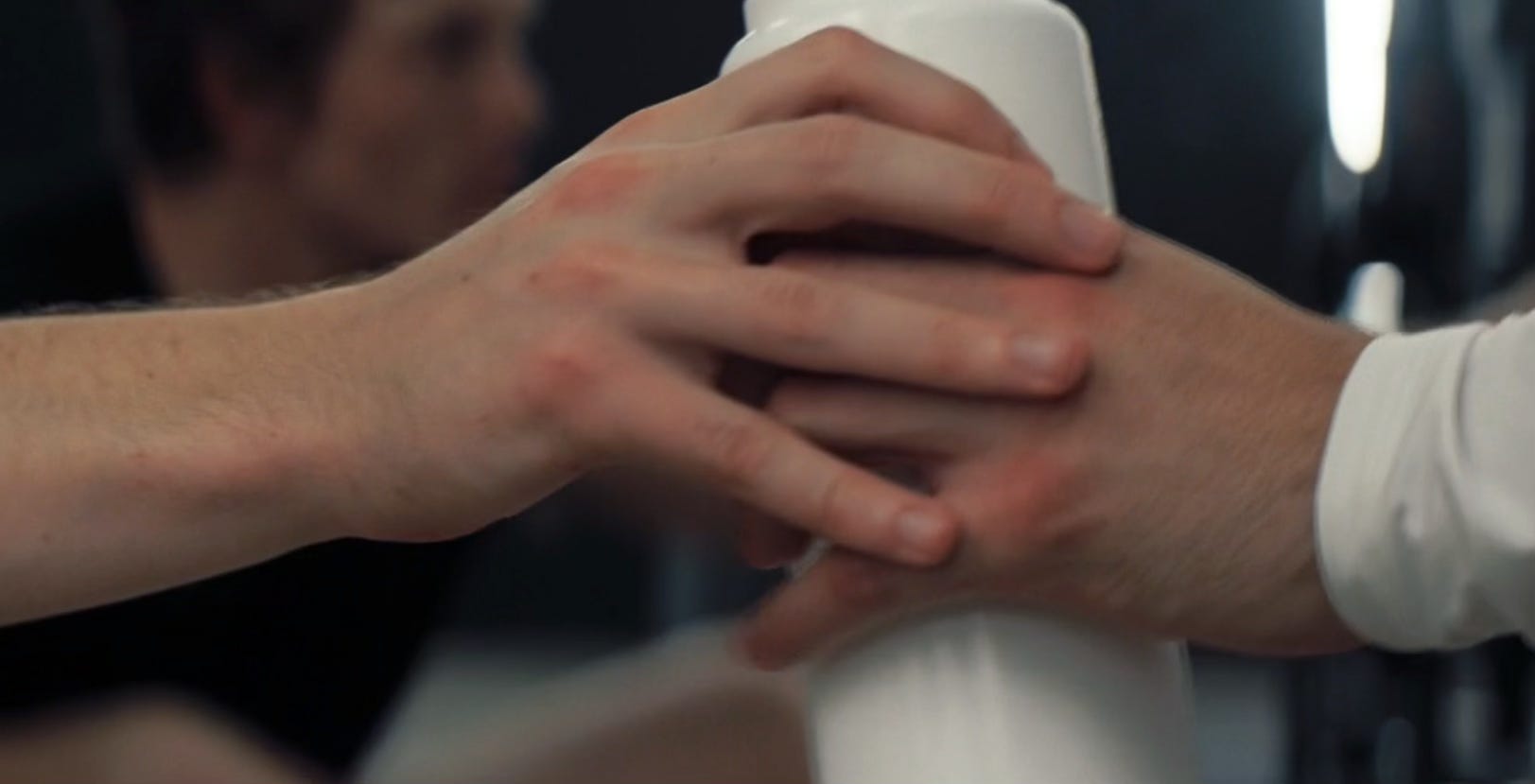
There’s already a full-to-bursting library of gay content in that vein – Amazon Prime heaves with queer misery cinema, it’s exhausting – and some of it even ends up winning Oscars. Queer people like to see that version of closeted behaviour represented too, however, especially those of a certain vintage. So many badly lit short films portraying queer distress as high art. Ugh. There’s more than enough room for the lopsided smiles of buff, sweaty hockey players as they briefly engage in finger fondling while passing a water bottle.

Perhaps some straight people like shows that focus on closeted gay men. because the heroes are lonely, and sad, and unthreatening – proof that heterosexuality is both the default and the answer to all your problems. Happy, queer couples – or even ones who can’t stand each other but are staying together for the cavapoo – challenge the status quo. They teach children being yourself is okay. (Being out and single also has many benefits, but those shows tend not to go nuclear.)
There are myriad essays that could be written about how straight people engage with queer content – flurries of them clogging up the airwaves already – but any idea that shows like Heartstopper and Heated Rivalry are ‘not for us’ is ridiculous. If the plot features queer culture in any way, even if it’s cast with a team of straight actors and written by a lady vicar, I have a right to watch it! Representation is bigger than ever, but still next to zero. Thanks.
And if you don’t like it: yearn, baby, yearn.
Heated Rivalry is on Sky and NOW TV in the UK.
Heartstopper is available on Netflix.
SKAM series 3 is harder to find in the UK, but some episodes with English subtitles can be found on YouTube


🖤
At a time when I'm growing weary of crowbarred-in badly written pornified smut in the romance books I'm reading, Heated Rivalry was a refreshing change of pace/scene because I felt like it really focused in that yearning you talk about, and the 'but we can't' of it all. I did a cheeky re:read when all the press about the tv show came out and enjoyed but didn't adore it, so wasn't going to bother watching until I saw a clip on Instagram. It's rare a tv adaption of a book works for me but the casting/chemistry was spot on and I could write poetry about Connor Storrie's bum (up there with the Russian fella from White Lotus S3).